
For most of my young life, I remember exploring creeks. As a child, my friends and I had a tiny stream that we played in. It was called Godfrey’s Ditch but it was gravel and sand and therefore the water was generally clear. That was not the case when my brother and I explored Ten Mile Creek down below the old Haney Place. Almost any time we visited my grandparents, we were in and out of the house with a biscuit in hand and heading for the creek. You couldn’t play IN the creek but you could explore and we always liked to cross the creek on a pretty large cypress foot log. We worried about falling into the muddy water, five or six feet below.
Much, much later in life we ended up living in Fayetteville. First, I only knew about Lee Creek because we loved to go hiking in Devil’s Den. But then we moved to north Fayetteville where our back yard ends on Scull Creek. My son, Adam and I have explored Scull Creek in either direction. It empties into Mud Creek, which is somewhat more muddy than Scull Creek but nothing like southern creeks. Mud Creek joins Clear Creek…which is the creek that was dammed up to create Lake Fayetteville. I got to know Clear Creek when I started riding a bicycle for exercise after I got artificial knees.
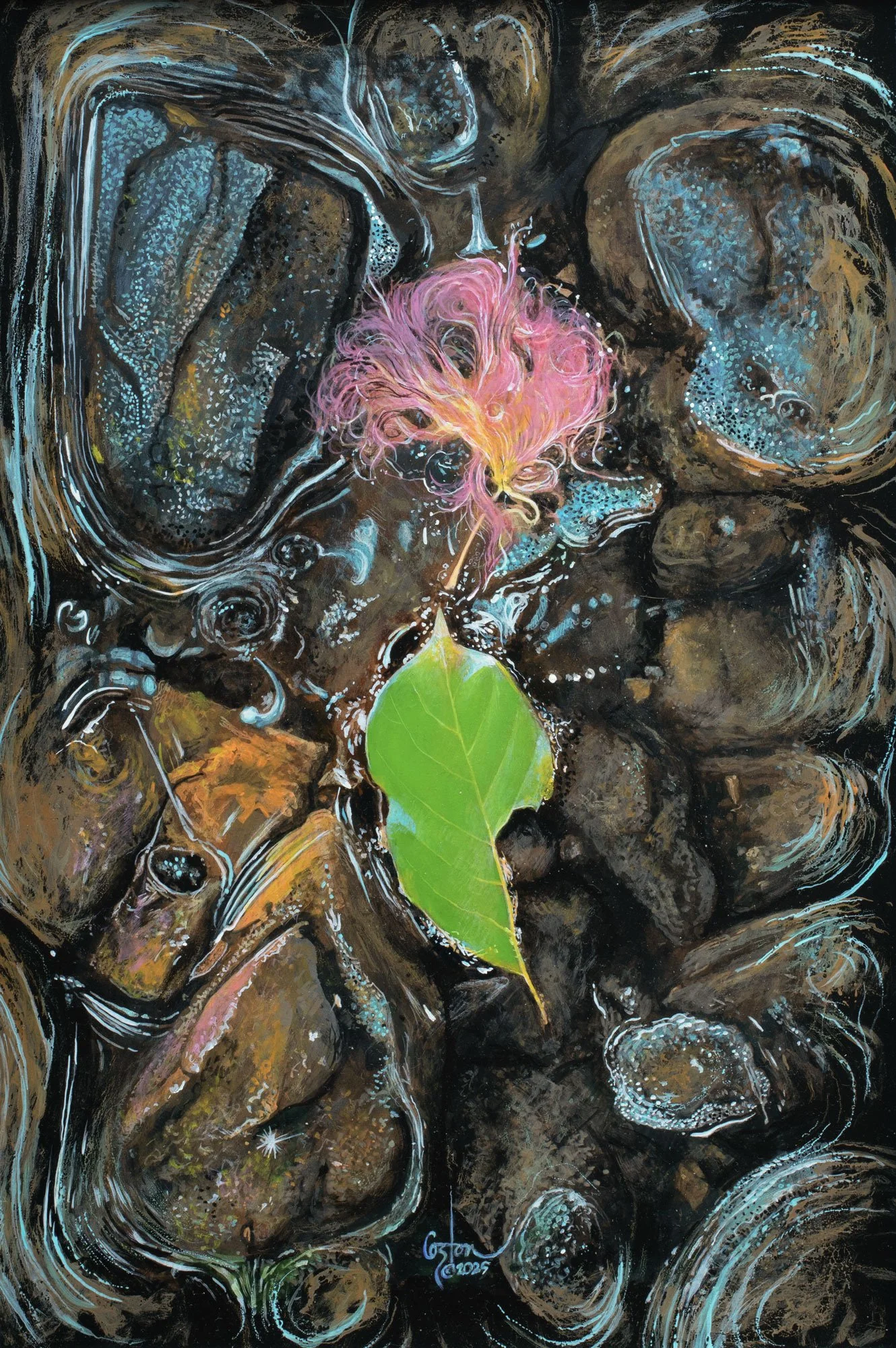
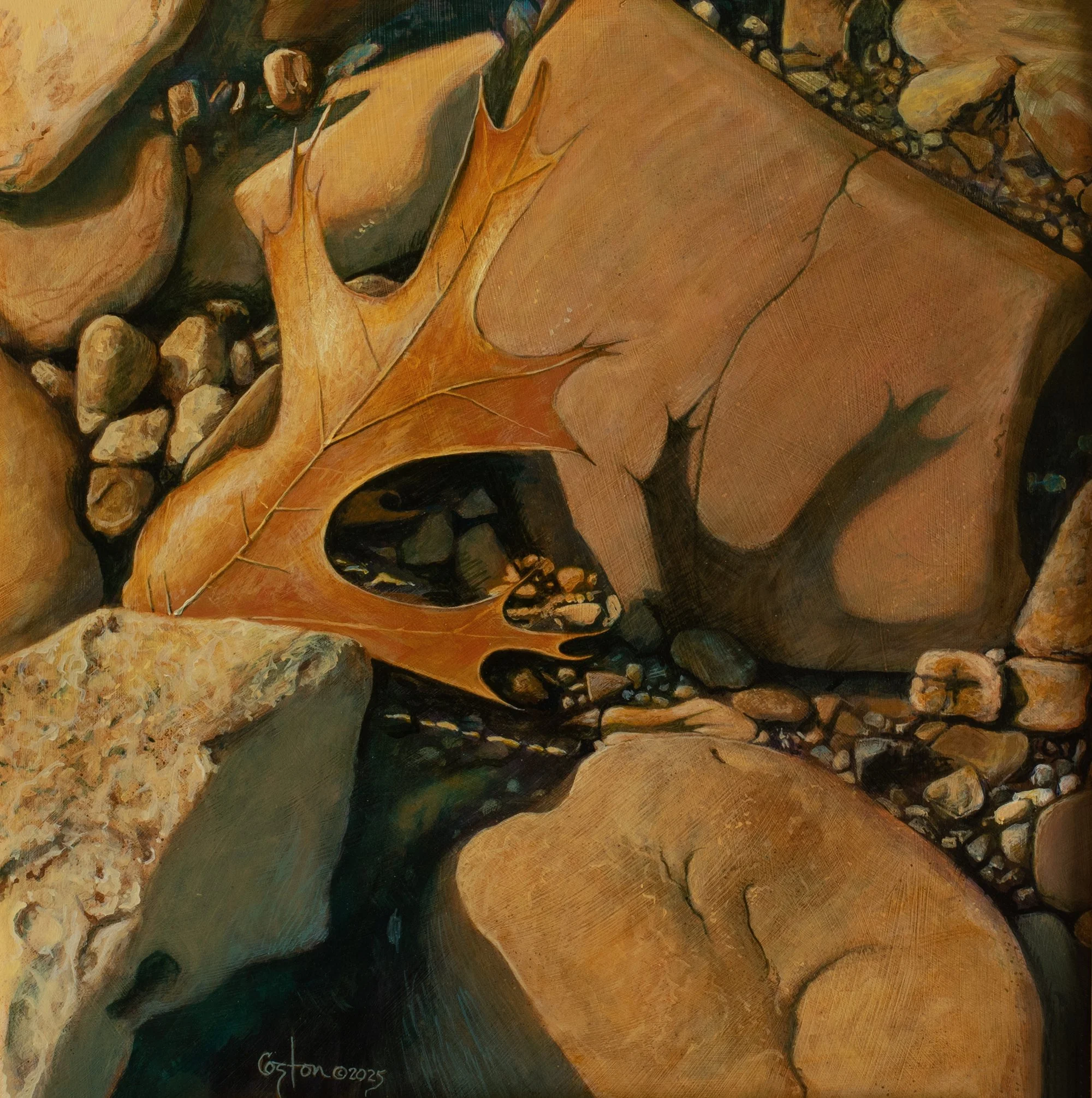
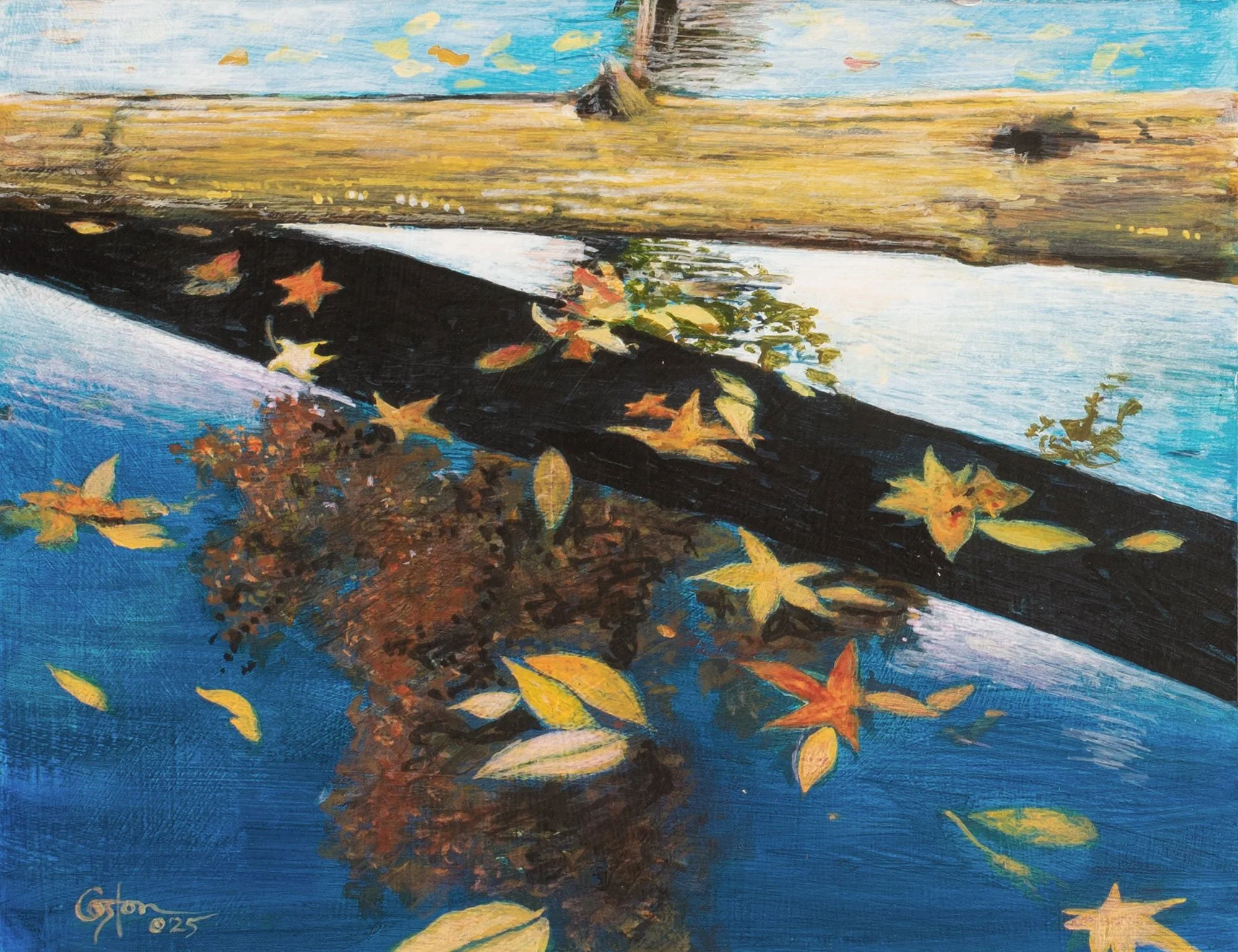
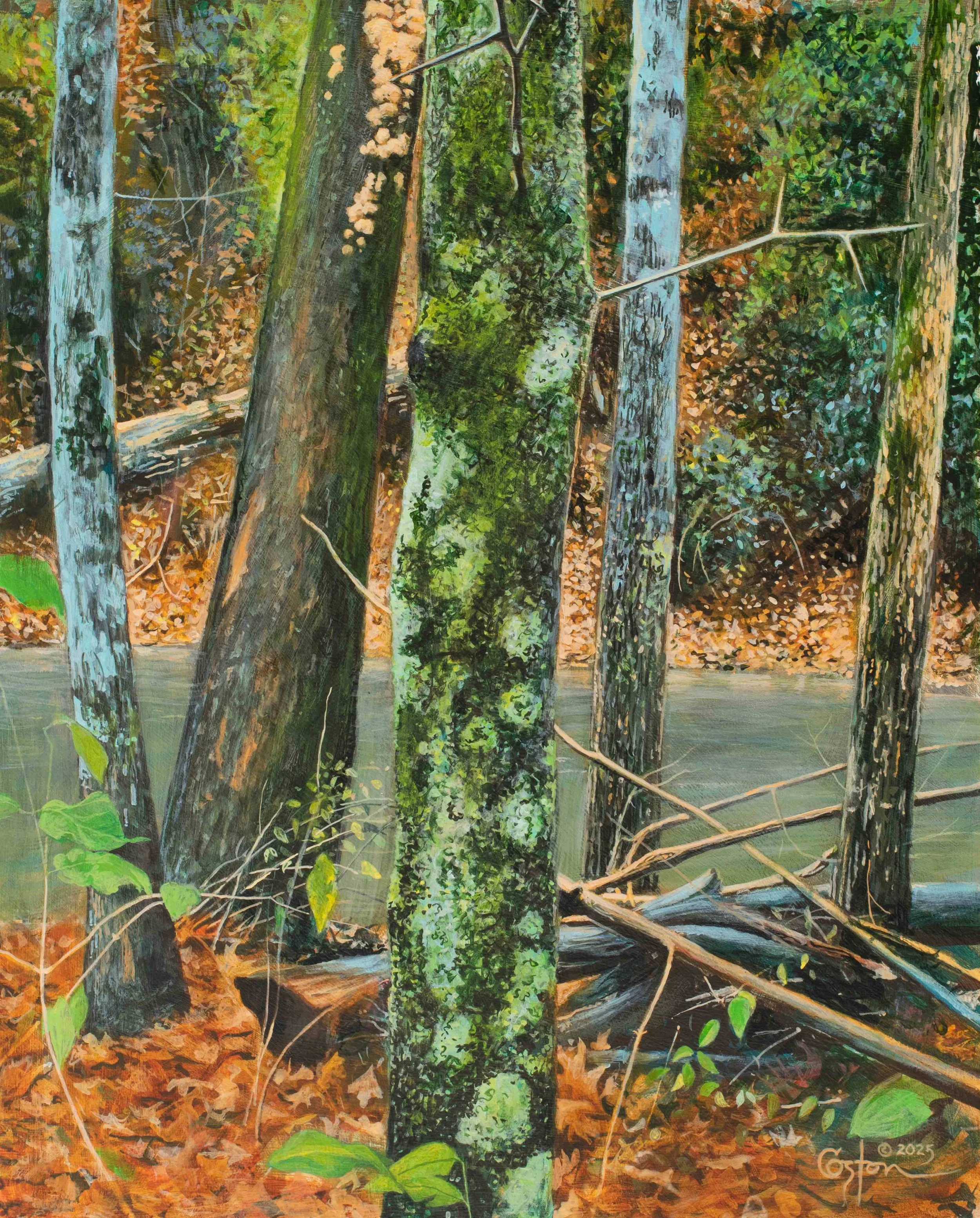
After my second knee replacement I decided to explore these creeks in more detail. So I would stop and walk around…mostly in the winter. Snakes, ticks and certain plants are less troublesome in the cold months. Leslie insisted I carry my iPhone with me and I started taking photos of “my” creeks. Before long I had hundreds of photos looking up and down creeks. At some point I started taking photos of the surface of the creek…as opposed to trees, rocks, etc. Seeing the surface in detail and how it changes and what the reflections really looked like woke me up. It was a whole new thing…at least for me. I started looking more closely at the creek and then looking INTO the water. I would photograph leaves under the surface as they floated in layers. I would examine roots sticking out of the creek banks. I studied the tiny tributaries that feed into Clear Creek. There were small fish to watch. There were tiny snails to examine along with small muscle shells. I got very interested in “my” creeks.
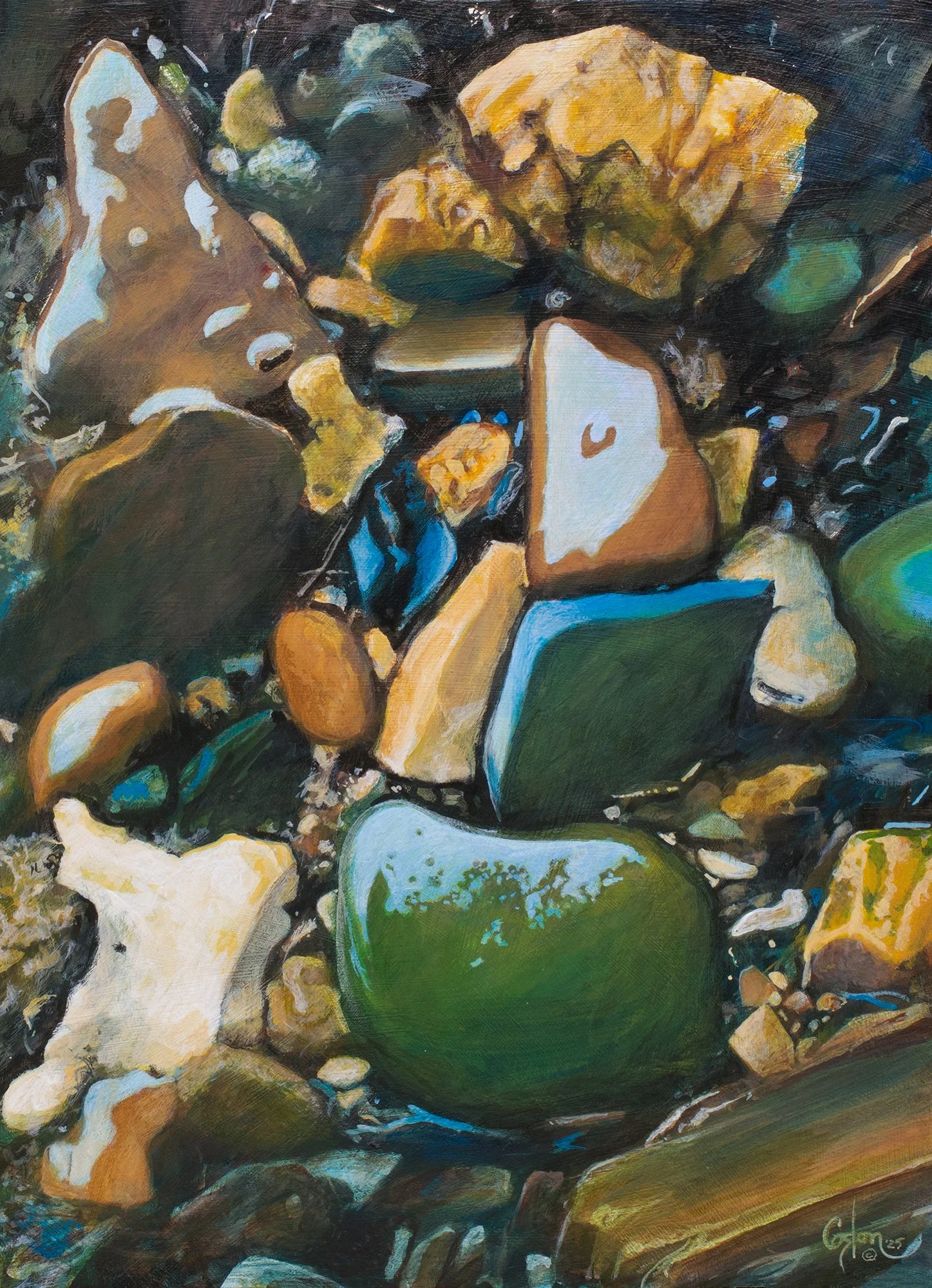
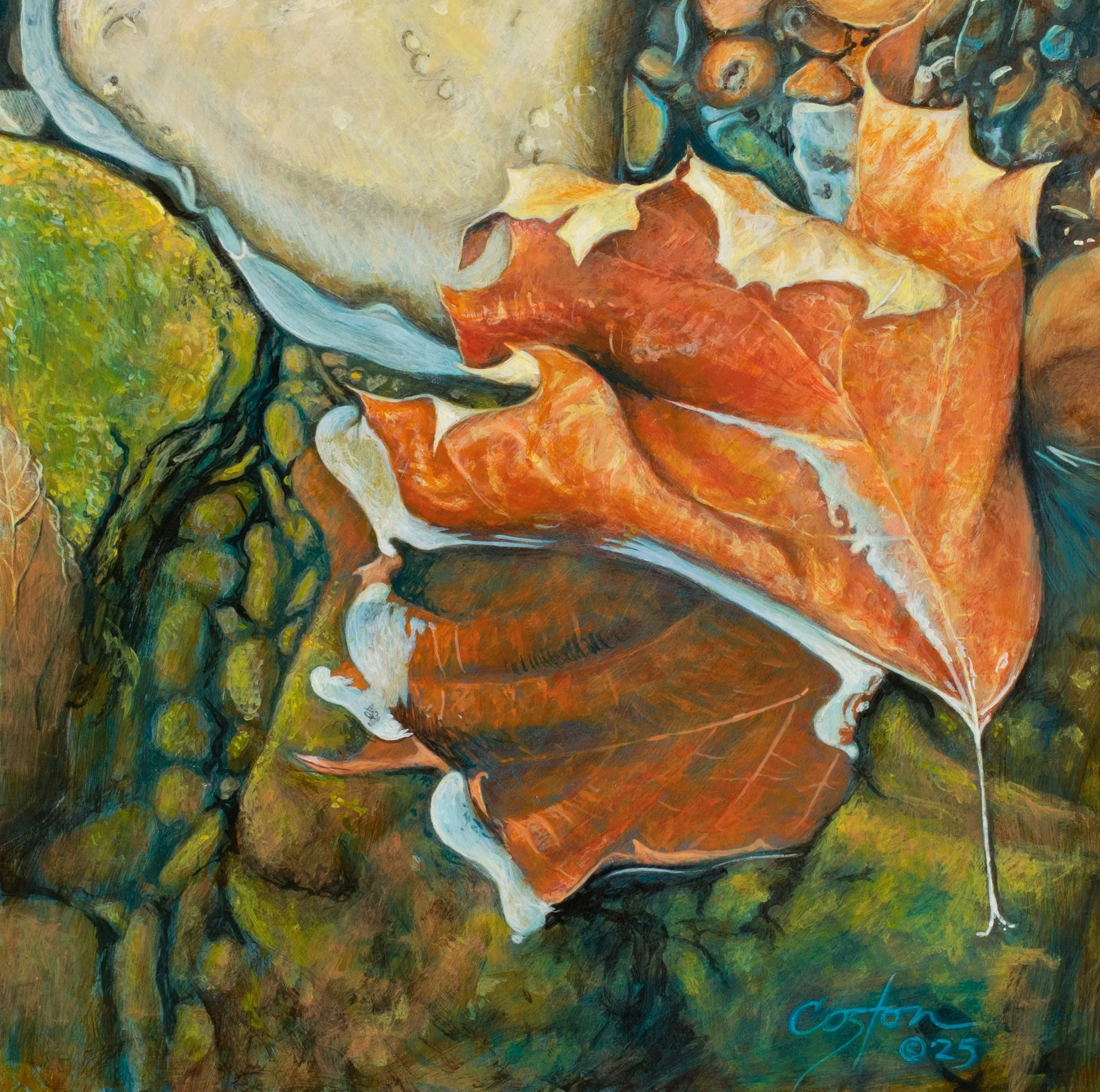
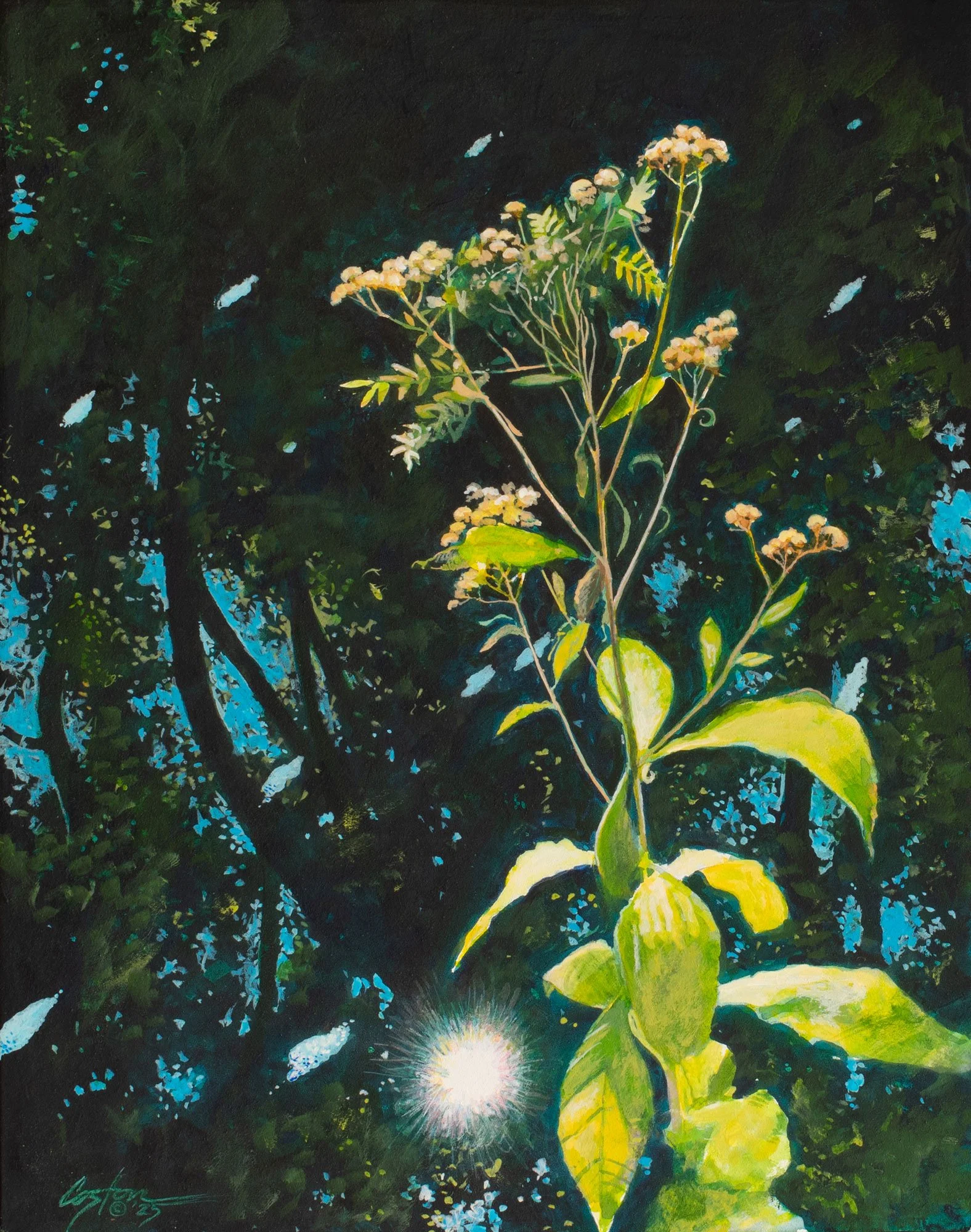
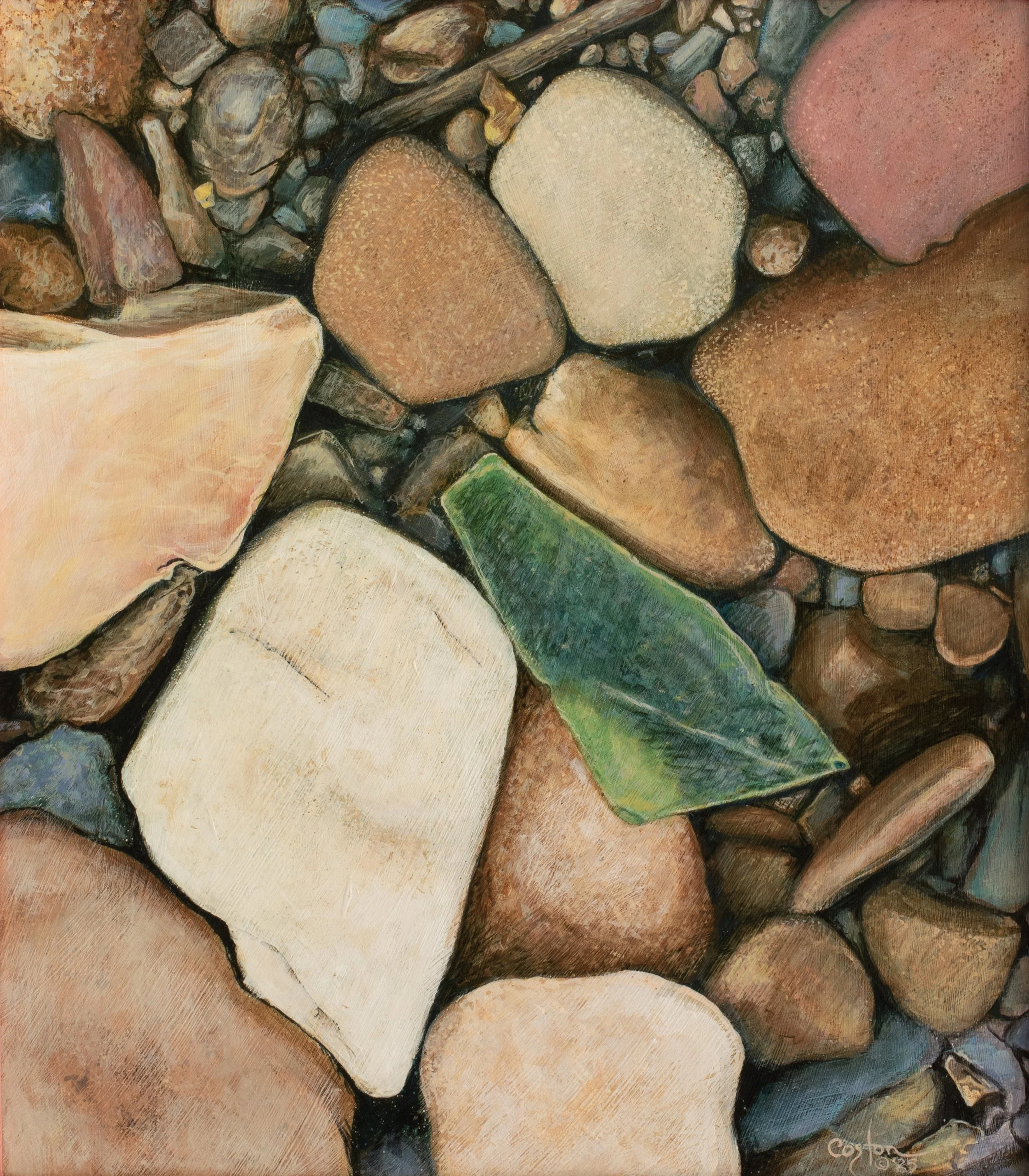
I have constantly observed the various “critters” who live in and around the creeks. Beavers are rare now…but are still around. Hawks, wood peckers and many other birds abound. We see pileated woodpeckers behind our house along with owls and kingfishers. I hope they will survive the buildup that is occurring here in northwest Arkansas. Mammals are rare but squirrels are plentiful. Quite often I will spy a large fox squirrel loping along the ground…heading for a tree. And I can’t forget the great Blue Herons. They don’t care for humans but ever so often I will surprise one apparently asleep, and I can get some good photos. I could go on and on about the animals…from butterflies to bob cats. And turtles! Deer live just about everywhere in Fayetteville, but especially in the creek bottoms. Most animals avoid people and some just ignore us.
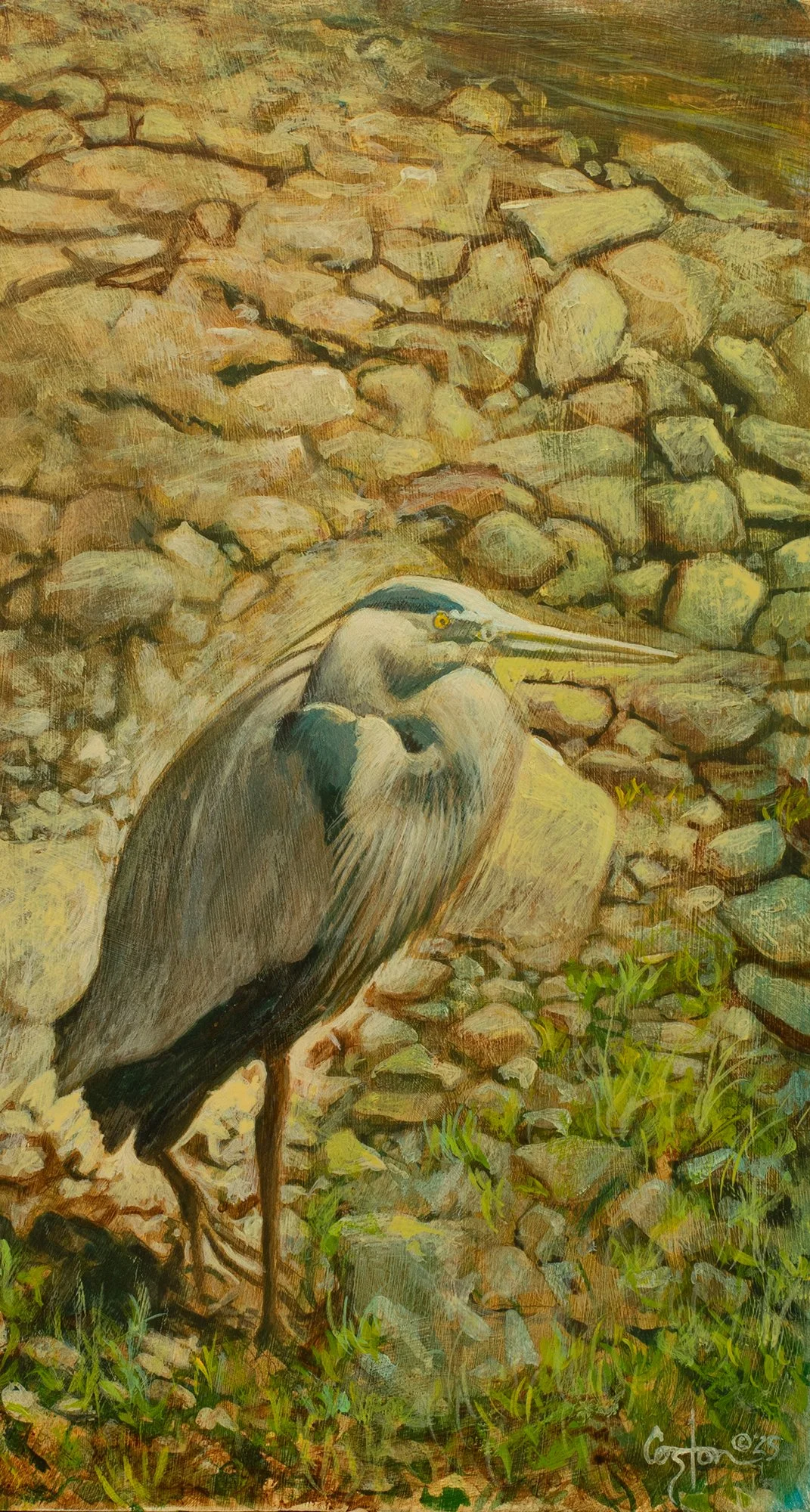
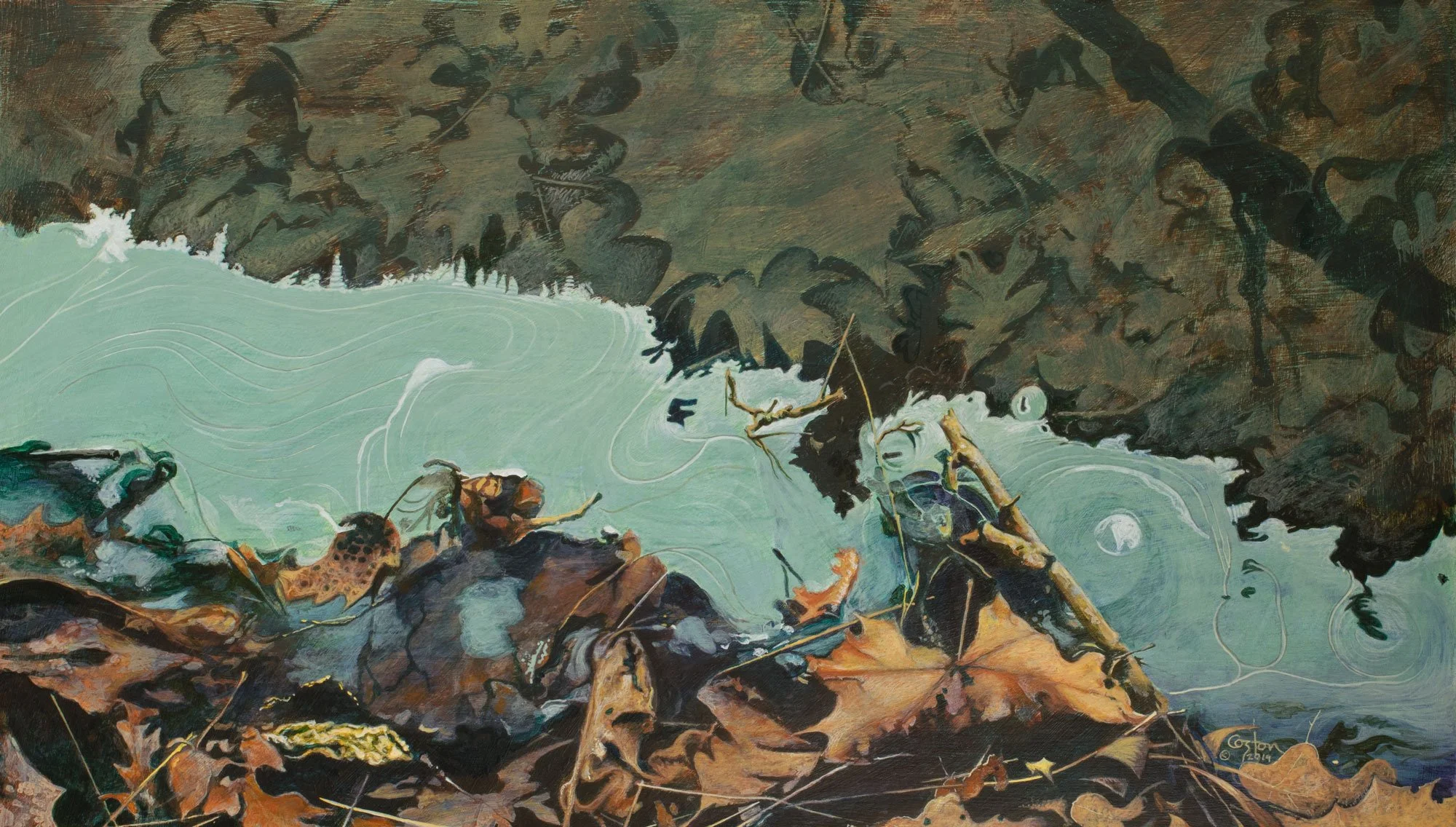
“Caught Napping” 9 x 16 inches, acrylic on masonite, 2025
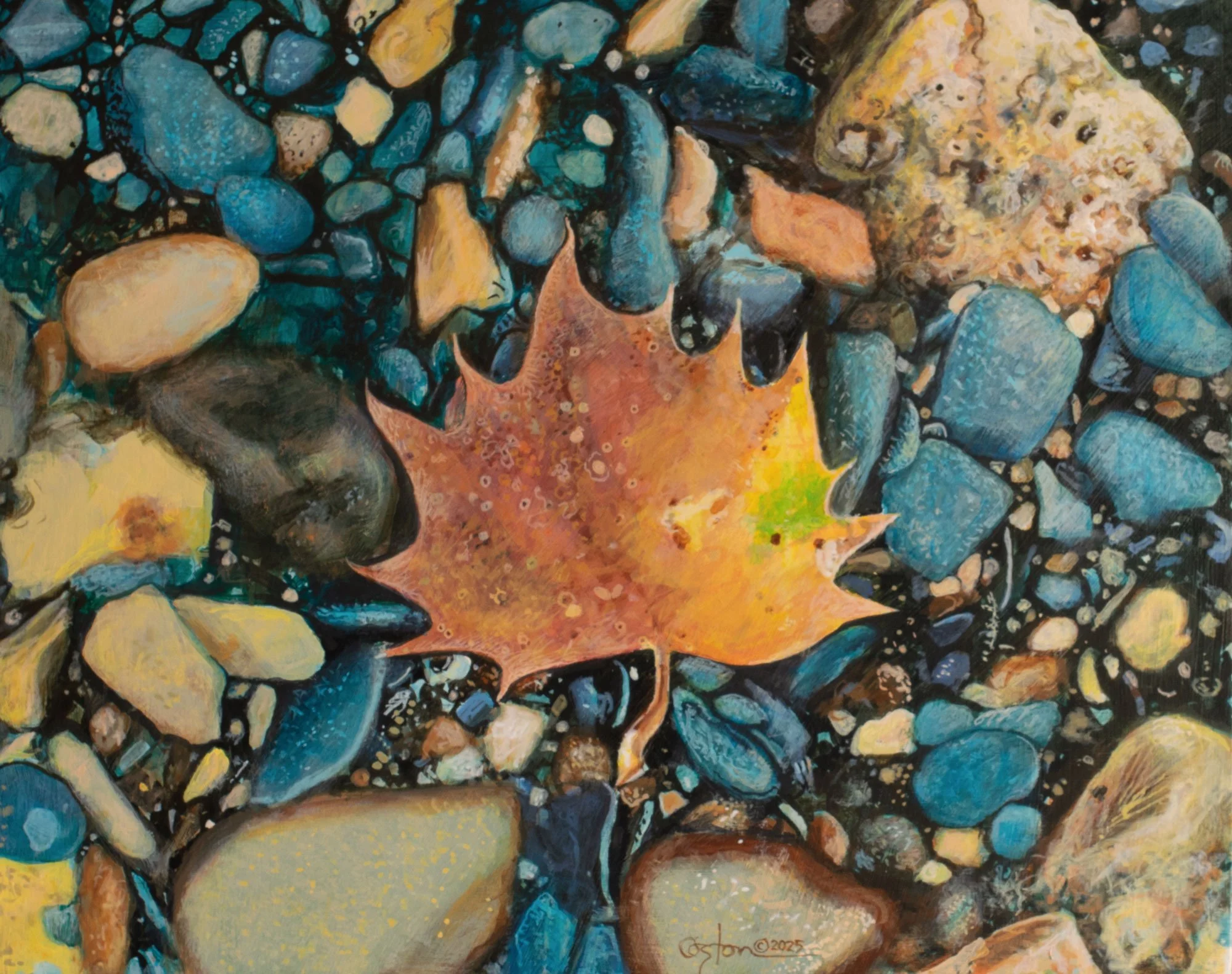
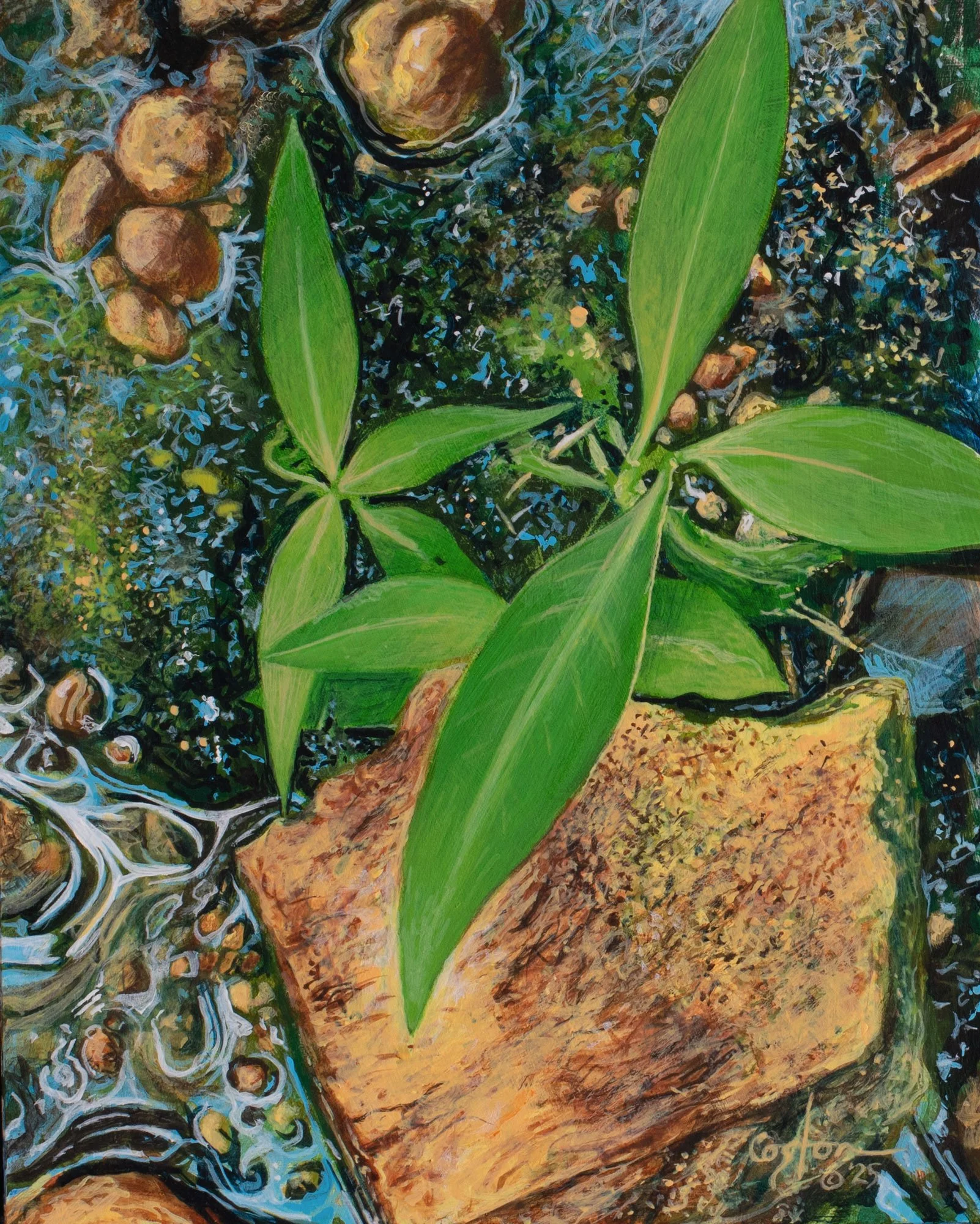
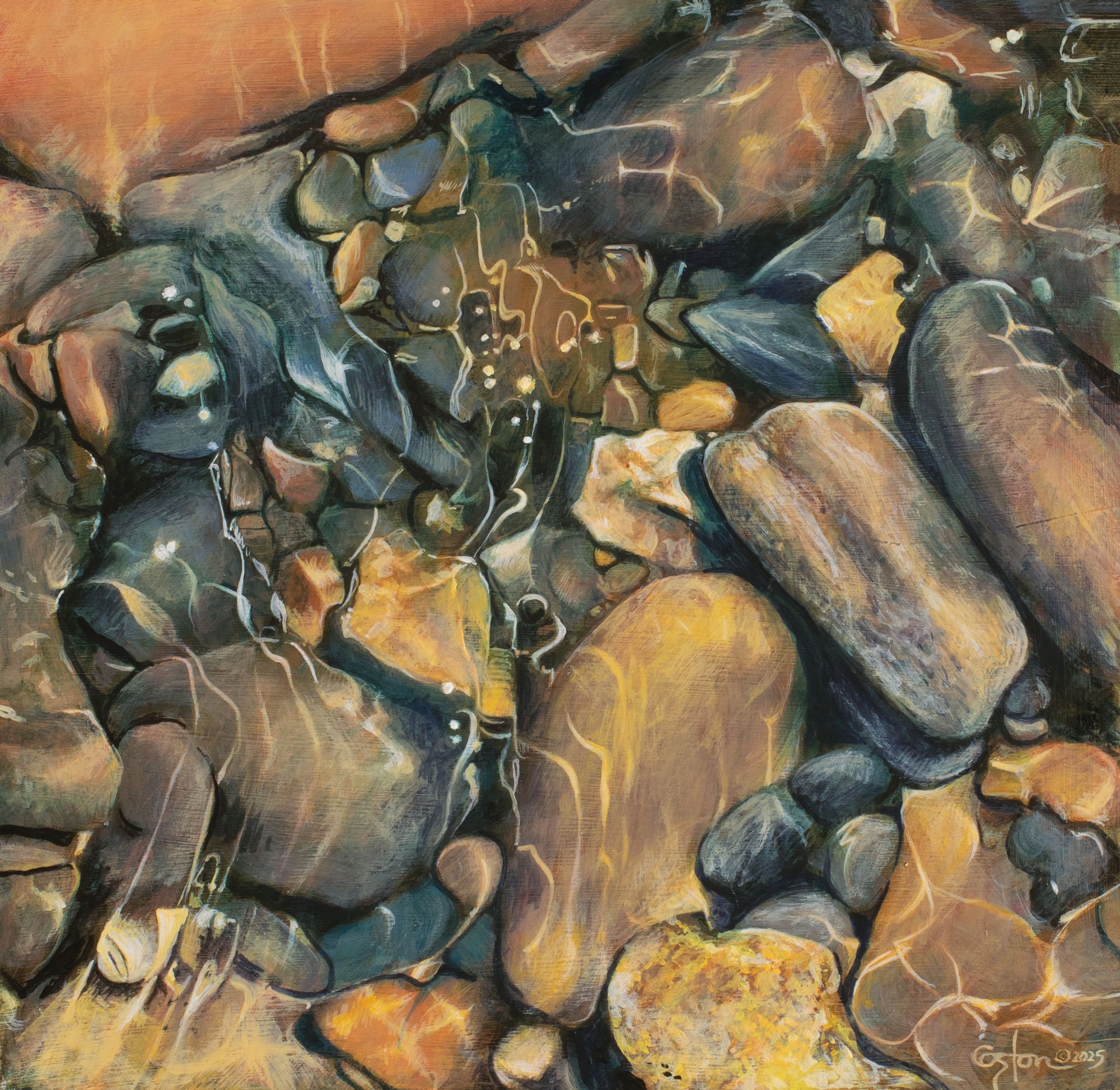
And after all these years of studying “my” creeks, I wanted to do a series of paintings that would show what they are like and perhaps encourage people to respect, and maybe even love these delightful waterways. Hundreds of years ago, Native Americans lived right where we live today. I have the arrowheads and scrapers to prove that. Settlers moved out here and lived along these creeks for a hundred or so years before getting together in towns. (Scull Creek is named after Reverend William Scull, an Episcopalian minister here in 1841.)
And we are now squeezing the creeks into tiny slivers of tree lined undrinkable water ways. But there are still beautiful places to be found along these creeks. Those places are probably not where a highway or street crosses them now. Fortunately the system of hiking and biking trails have to follow the creeks and that may save them. I certainly hope so. But they are not like they were. My paintings are a snapshot of “my” creeks.
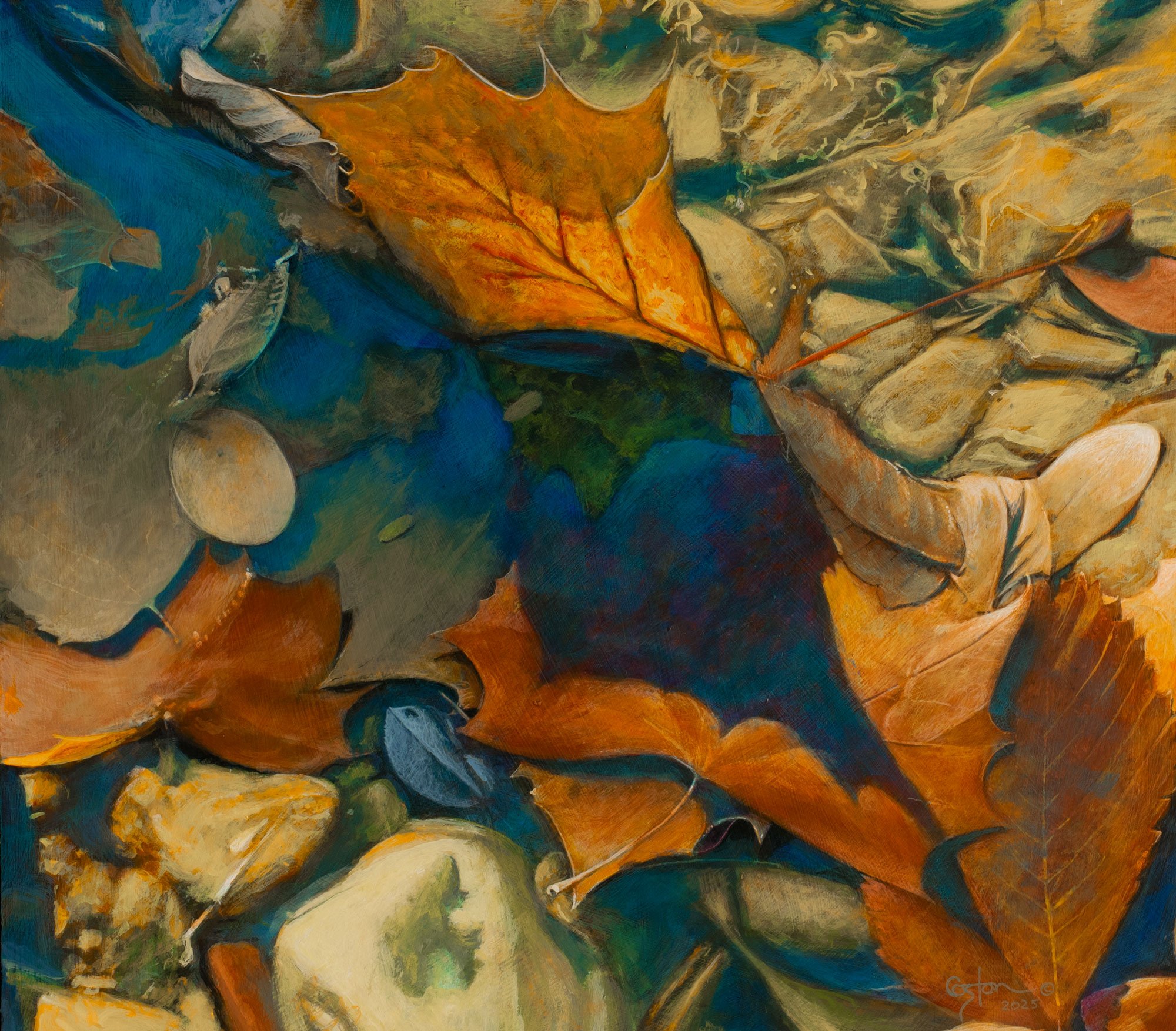
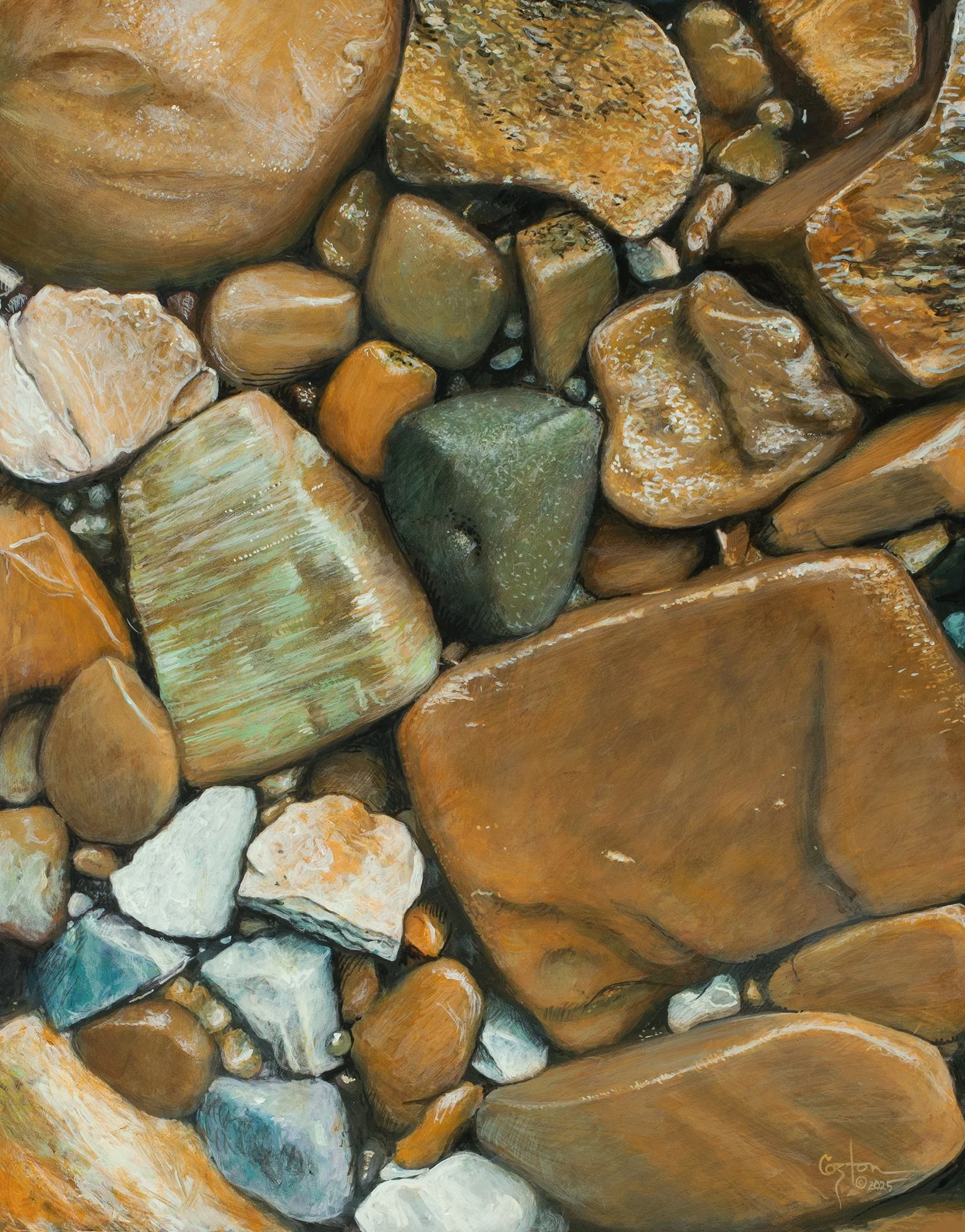
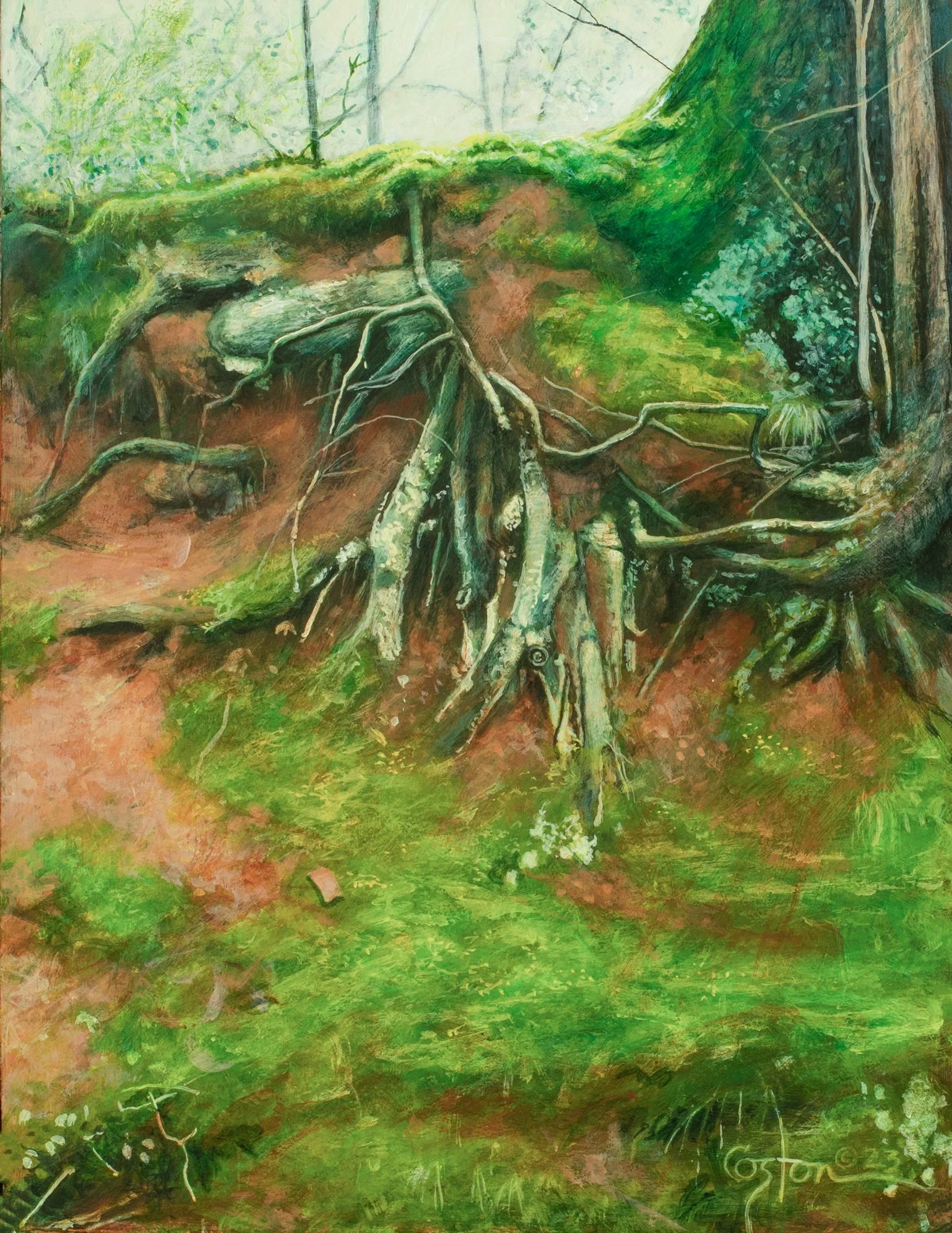
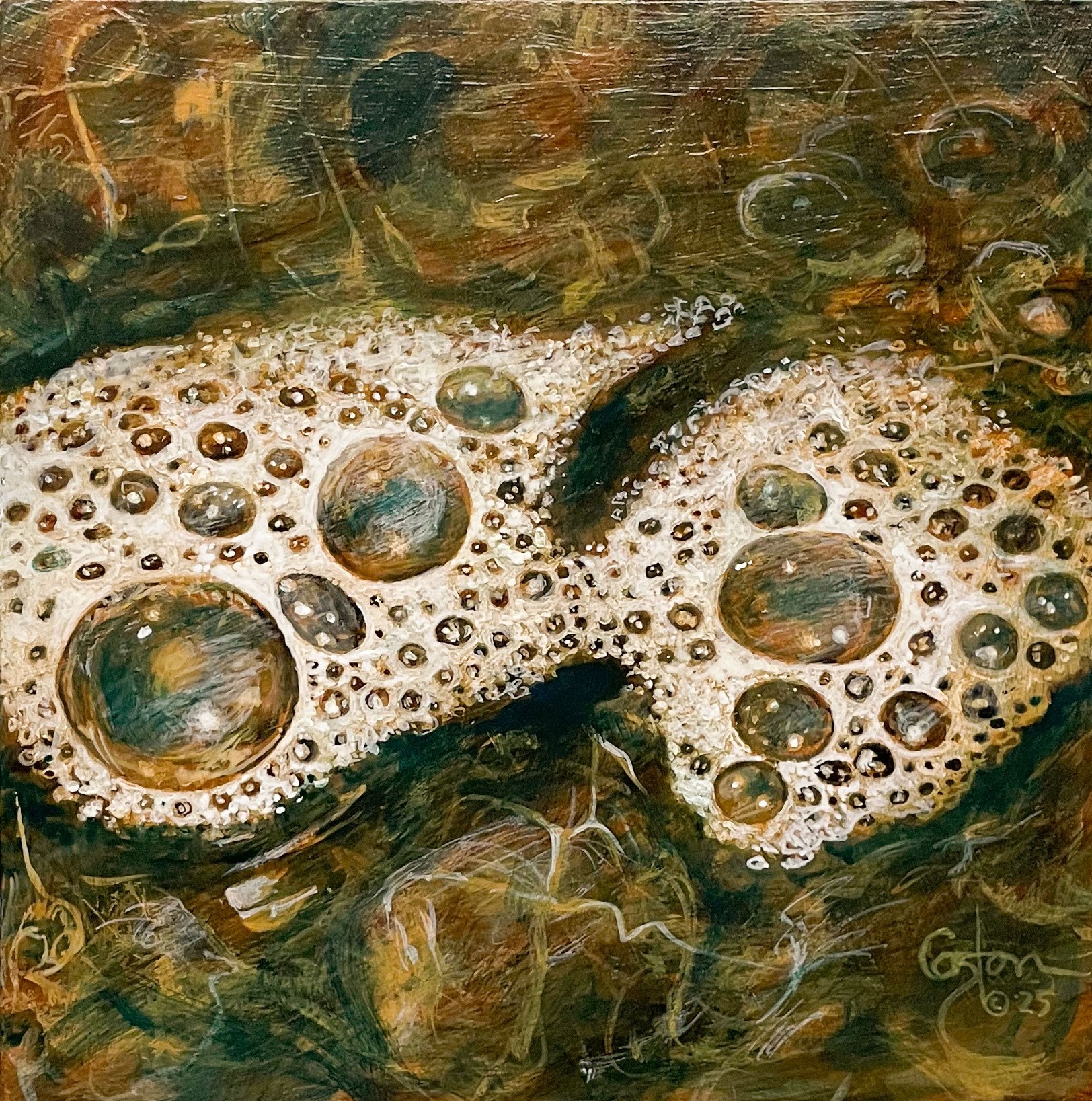
View these paintings in person at Cantrell Gallery in Little Rock. Open Tuesday through Saturday, 10:00 to 5:00.
8202 Cantrell Road, Little Rock, AR 72227
501-224-1335 cantrellgalleryar@gmail.com